


Living off the coding agent: Two tales of tunnels and LaunchAgents
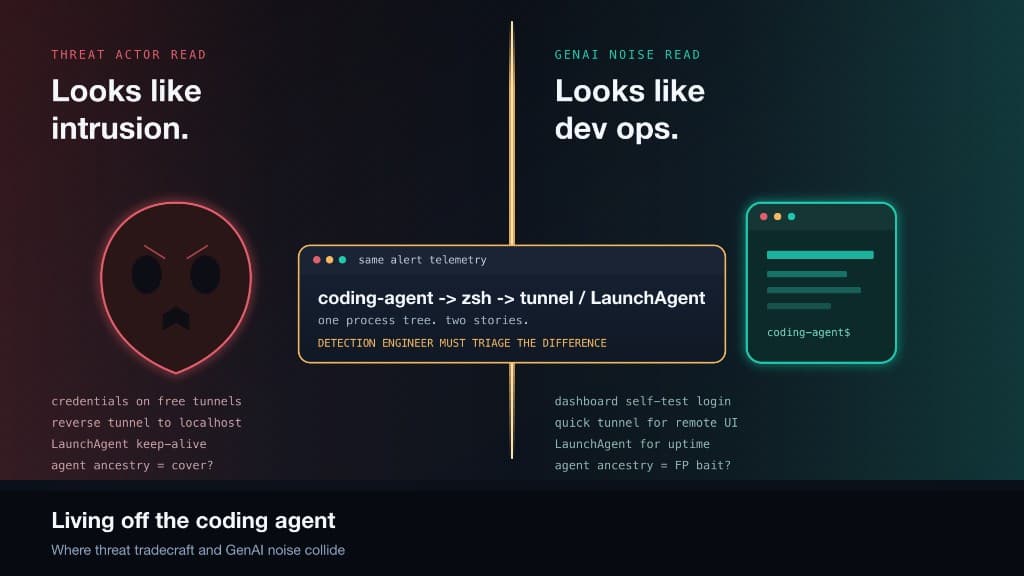
Coding agents such as Claude Code and Cursor are vendor-signed, used all day on developer laptops, and routinely open shells, call APIs, edit files, and install helpers. That makes GenAI-adjacent alerts challenging to investigate. The parent looks trusted, while the children can still look a lot like classic high-severity activity.
This Elastic Security Labs case study walks a macOS endpoint window where Claude Code ancestry, free tunnel brokers (localhost.run / lhr.life, Cloudflare Quick Tunnels, ngrok), credentialed HTTP, and LaunchAgent persistence land in the same alert pile - and why detection engineers have to triage the difference between intrusion and vibe-coded ops.
Key takeaways:
- Agent-parented reverse tunnels and LaunchAgents can expose a local admin app to the internet - treat that as high severity even when it looks like ops, not confirmed malware
- Known free tunnel brokers show up next to credentialed HTTP and LaunchAgents in the same session
- The hard part is validation: trusted coding-agent parents, dual-use destinations, and high-severity outcomes can all arrive together
Check out the original blog post at Elastic Security Labs.